
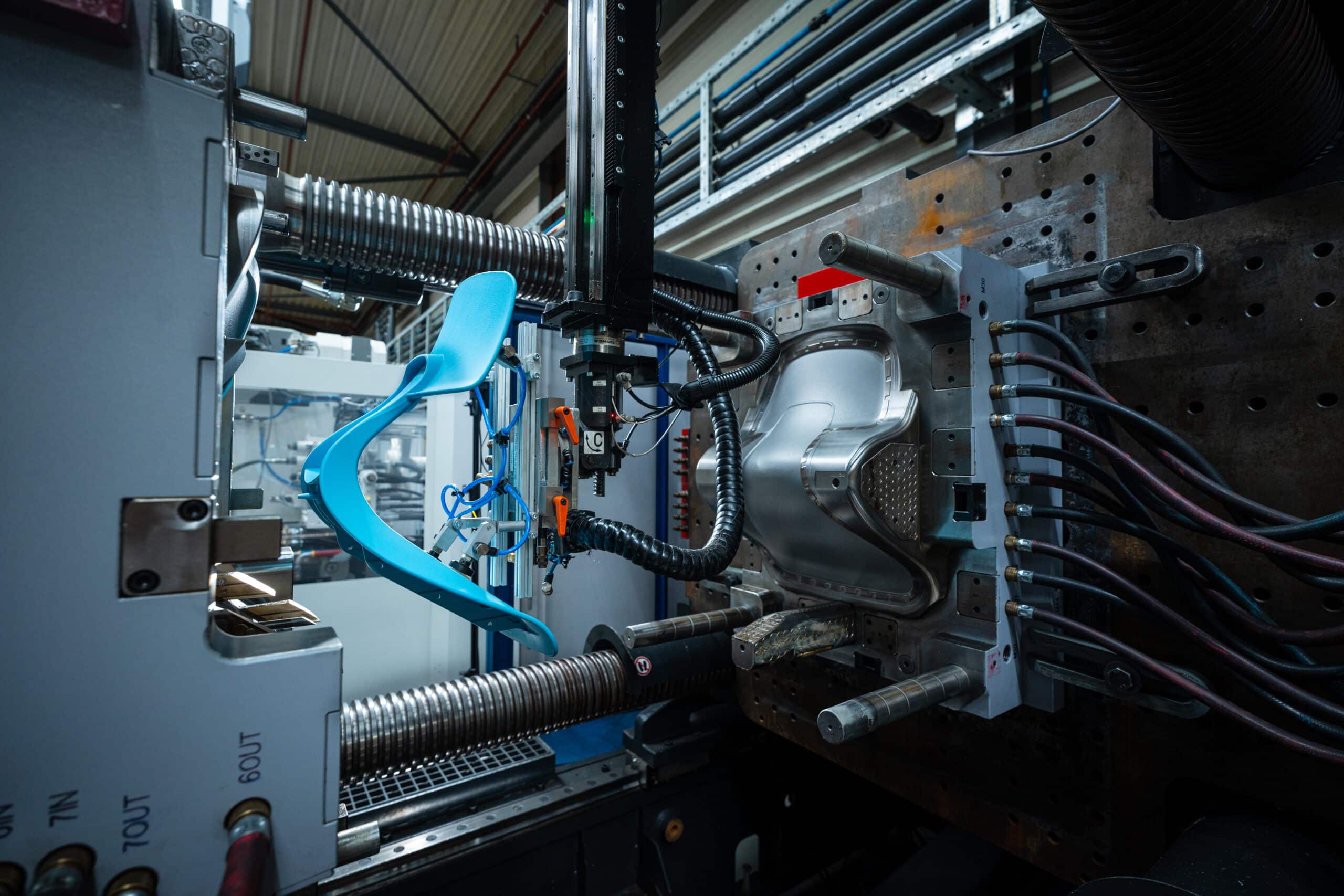
How does an injection molding machine work?
The injection molding machine is at the heart of the production process at Timmerije. Here, plastic pellets are heated, injected, and molded into a product with the correct shape and finish. Our modern injection molding machines are designed for maximum precision, efficiency, and repeatability. By investing in new technologies and automation, we can produce complex plastic parts with consistent quality and minimal waste.

How an injection molding machine works
An injection molding machine consists of several interconnected components, each of which performs a crucial step in the injection molding process—from the feeding of plastic pellets to the controlled melting, injection, cooling, and ejection of the product. Each phase requires precise coordination between mechanical and thermal systems.
The schematic diagram below illustrates how these components work together to form a single, closed-loop process in which material flow, temperature, and pressure are continuously regulated. This ensures that each product is formed under optimal conditions, resulting in maximum dimensional stability, short cycle times, and consistent quality.
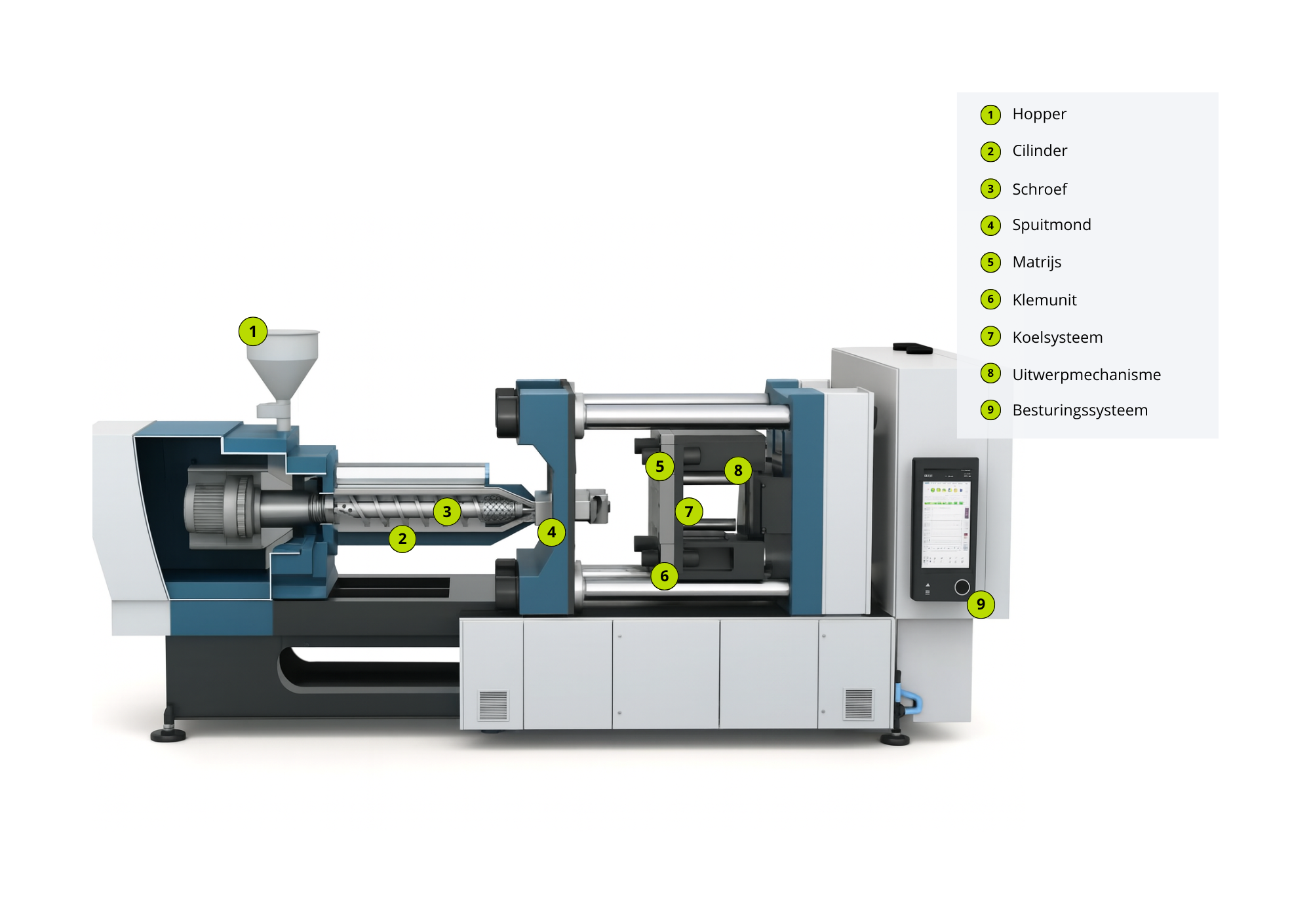
- Hopper – feed of plastic granules
The hopper is the starting point of the injection molding process. The plastic pellets are fed in through this inlet. The material falls from the hopper into the heated cylinder, where it is prepared for melting.
- Cylinder – controlled melting process
Inside the cylinder, the plastic pellets are transformed into a homogeneous, liquid mass through heat and friction. The temperature is precisely controlled to ensure the quality of the final product.
- Screw – plastic conveyance
The rotating screw conveys the plastic through the cylinder, mixes the material, and ensures uniform melting. The screw consists of three zones: feed, compression, and metering/dosing.
- Injection unit – precise injection
The molten plastic is pushed forward by the screw and injected into the mold with high precision. During this process, the screw acts as a plunger, causing the material to completely fill the mold cavity.
- Mold – product design
The mold determines the final shape and quality of the plastic part. This precision tool consists of several parts that together form the mold cavity. Depending on the application, the mold is made of hardened steel or aluminum for maximum durability.
- Clamp unit – secure and stable closure
The clamping unit keeps the mold firmly closed during injection and cooling. This prevents the high pressure of the molten plastic from opening the mold, which is essential for a consistent end result.
- Cooling system – controlled cooling
Cooling water—often a mixture of water and glycol—flows through precisely positioned cooling channels, quickly and evenly dissipating heat from the mold. This controlled cooling shortens the cycle time and ensures that each plastic part retains its shape, dimensional stability, and surface quality. - Ejection mechanism – precise ejection
As soon as the mold opens, strategically placed ejector pins carefully push the plastic part out of the mold cavity. This precise movement prevents damage and ensures consistent, high quality. - Operating system – process control and automation
Modern injection molding machines are equipped with advanced control systems that monitor and optimize temperature, pressure, screw speed, and cycle times in real time. This ensures maximum process stability, quality, and efficiency.
What types of machines are there?
Depending on the application, the plastic material, and the desired product properties, different types of injection molding machines are used. Although every machine operates according to the same basic principle, the methods of drive and pressure buildup differ. These variations determine not only the force, speed, and precision of the process, but also energy consumption and suitability for specific production runs. The main types of injection molding machines are explained and compared in more detail below.
Hydraulic injection molding machine
A hydraulic injection molding machine uses hydraulic pressure to drive the screw and clamping unit. Thanks to their robust construction and high clamping force, these machines are ideally suited for producing larger parts that require a great deal of force. They are distinguished by their reliability, long service life, and consistent performance. As a result, hydraulic injection molding machines are a proven choice for demanding production environments.
Electric injection molding machine
An electric injection molding machine uses precisely controlled servo motors instead of hydraulics. This ensures an extremely stable and quiet process with minimal energy loss. Full control over pressure, speed, and temperature makes these machines ideal for products where precision, repeatability, and surface quality are essential. In addition, they contribute to a more sustainable production process thanks to their low energy consumption and oil-free operation.
Hybrid injection molding machine
A hybrid injection molding machine combines the best of both worlds: the power of hydraulics and the precision and energy efficiency of electric drive systems. This configuration makes the machine exceptionally versatile and suitable for a wide range of plastic parts, from technical components to aesthetically high-quality products. Thanks to their flexible applicability and stable performance, hybrid machines offer a forward-looking solution for products that demand efficiency and precision.