
How is quality ensured in plastic injection molding?
Quality in plastic injection molding is determined by the interplay between product design, material, mold, and process settings. These factors directly influence the dimensional accuracy, dimensional stability, functionality, and reproducibility of plastic parts.
This page explains how quality is ensured during the injection molding process and what role process control, inspections, and validation play in reliable mass production.

Quality assurance begins before mass production
Consistent product quality begins during product development and engineering. During this phase, decisions are made that will directly impact the injection molding process later on. These include wall thickness, tolerances, material behavior, gate design, and mold design.
By conducting a technical assessment of these factors in advance, risks such as shrinkage, warping, sink marks, or dimensional variations can be mitigated early on. This prevents quality issues from becoming apparent only during mold assembly or mass production and makes the process more manageable.
Aligning product design and manufacturability
A manufacturable design forms the basis for a reliable plastic product. With the right design guidelines for plastic injection molding, factors such as wall thickness, tolerances, and draft angles are tailored to the material, mold, and production process. For technical plastic parts, it is important to define critical product characteristics in advance. These include mounting points, fits, sealing surfaces, or other functional dimensions that must remain within a specific tolerance during production.
Analyze production risks in advance
Not every risk is immediately apparent from a 3D model. For example, weld lines, air pockets, shrinkage, or warping can occur during the filling and cooling of the mold. A mold flow analysis allows the material behavior to be simulated in advance. This makes it possible to optimize the design, gate placement, and process conditions before the mold is finally built.
Process control during plastic injection molding
A reliable plastic part requires a stable and repeatable injection molding process. During plastic injection molding, factors such as material temperature, mold temperature, injection pressure, holding pressure, and cooling time all influence the final result. Even small deviations in these process settings can have a noticeable impact on the product’s quality and dimensional stability.
These process parameters must therefore be precisely coordinated. If key settings fall outside the desired process limits, this can lead to variations in dimensional accuracy, surface quality, or dimensional stability. By closely monitoring critical settings during production, the process remains more manageable and deviations can be detected more quickly.
Recording critical process parameters
Which process parameters are critical varies depending on the product, material, and application. For dimensionally critical plastic parts, for example, shrinkage can be a decisive factor, while for visible parts, surface quality, color, or weld lines require particular attention. Wall thickness and product geometry also influence which process settings are particularly critical. Linking key product characteristics to relevant process parameters results in a controlled production process. As a result, deviations can be identified more quickly and investigated in a more targeted manner. This makes it easier to adjust the process without making unnecessary changes to other settings.
Monitoring process stability during mass production
Even after the process has been set up, monitoring remains essential. Variations in material, temperature, mold condition, or machine settings can affect the final product during longer production runs. If these changes are not detected in a timely manner, dimensional or quality variations can gradually accumulate.
By monitoring relevant process parameters during series production, deviations can be identified earlier. This allows for corrective action to be taken before large numbers of products fall outside specifications. In this way, the process remains under control, and the risk of rejects or rework is minimized.
Quality control of plastic parts
In addition to process control, the manufactured plastic part itself is also inspected. The specific inspections required depend on the part’s function, product geometry, and agreed-upon specifications. Particular attention is paid to characteristics that directly affect the performance, assembly, or appearance of the final product.
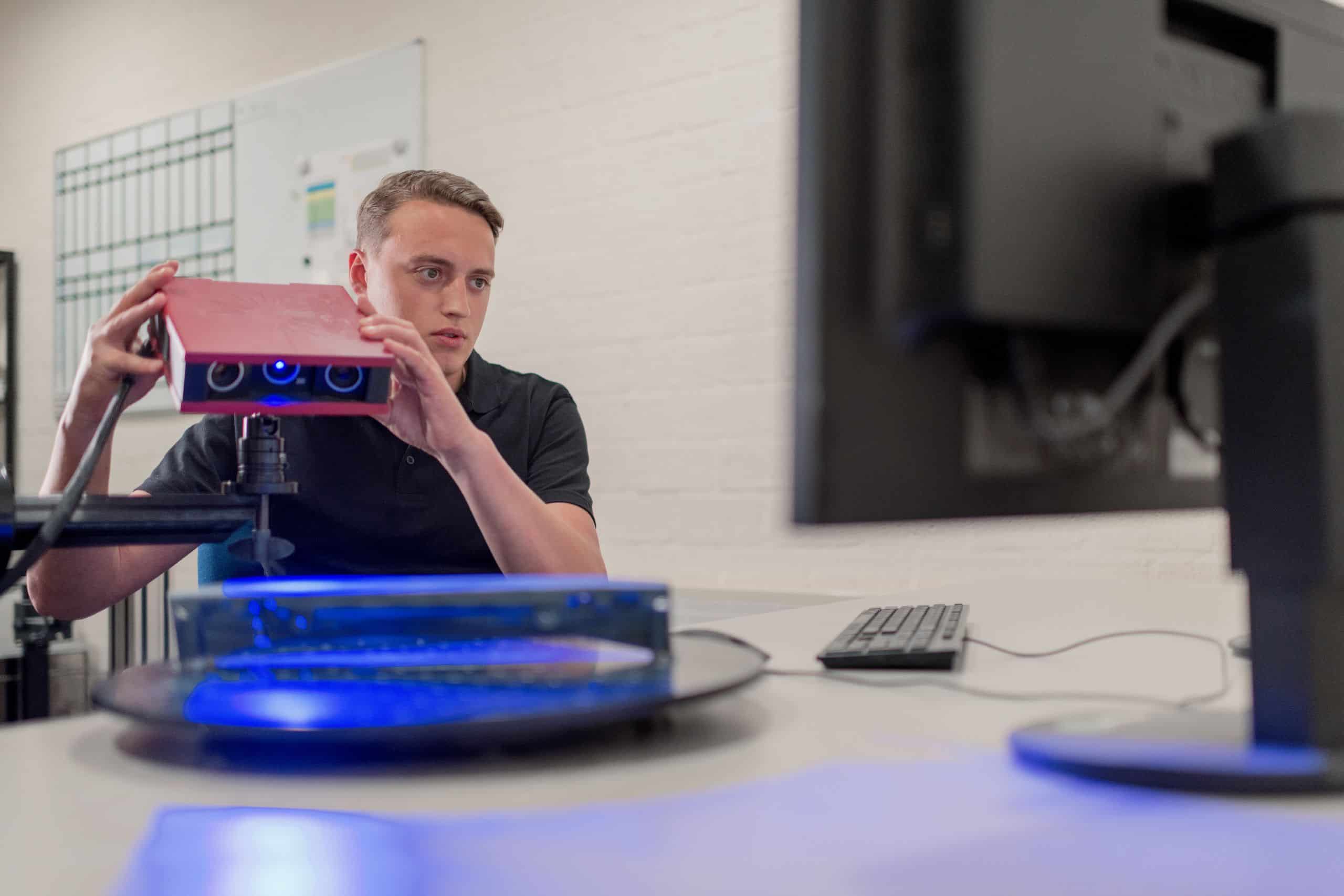
Quality control may consist of dimensional, visual, and functional inspections. Not every product requires the same level of detail or measurement method. By defining critical characteristics in advance, the inspection can be tailored to focus on what is technically relevant.
Check dimensions and tolerances
Plastic parts change during cooling due to factors such as material shrinkage. As a result, the material, wall thickness, product geometry, and process settings can all influence the final dimensions. Especially for technical parts, even a small dimensional deviation can affect fit, assembly, or functionality. Dimensional inspections are used to verify that critical dimensions remain within the specified tolerances. Examples include holes, mounting points, snap-fit connections, sealing surfaces, and other functional dimensions. The selected tolerances must align with what is technically necessary and reproducible within the injection molding process.
Assessing visual and functional quality
Not every quality deviation is dimensional. For visible parts, surface finish, color, weld seams, flow lines, or other visual characteristics can determine the final product quality. That is why cosmetic requirements are also specified in advance for such parts. For technical plastic parts, the emphasis is often more on functionality. Examples include fit, dimensional stability, snap-fit mechanisms, or the connection to other components during assembly. Quality control is therefore always tailored to the product’s application and function.
Materials and molds as part of quality assurance
In addition to process settings, the plastic material and the mold also have a direct impact on the quality of the final product. Both must meet the technical requirements of the part and continue to function consistently throughout production. After all, any change in material behavior or mold condition can be immediately visible in the final product.
The material determines, among other things, shrinkage, stiffness, strength, temperature behavior, and dimensional stability. The mold, in turn, affects filling, cooling, demolding, surface quality, and the final shape. Quality assurance therefore also requires monitoring these two aspects of the production process.
Controlled processing of plastic materials
The choice of material for plastic injection molding begins with the product’s function and load requirements. The selected material must then be processed under the correct process conditions to maintain the desired properties. With engineering plastics in particular, even minor deviations in processing can affect dimensional stability or mechanical performance.
Factors such as moisture content, drying, and processing temperature can play an important role in this regard. Therefore, it is not only the chosen material that matters, but also the way it is processed during production. Consistent material processing helps minimize variations between production runs.
Monitoring mold condition during production
During mass production, an injection mold is continuously subjected to mechanical and thermal stress. As a result, wear, contamination, or damage can affect dimensional accuracy, ejection, or surface quality over time. In larger production runs, even a minor change in the mold can ultimately become apparent in large numbers of products. By periodically inspecting and maintaining molds, their condition remains more manageable. This not only minimizes unexpected downtime but also reduces the risk of quality variations. A well-maintained mold thus directly contributes to a stable and reproducible production process.