
ReCYCLE: five components made from recycled material
The September-October issue of Kunststof Magazine takes an in-depth look at the results of the ReCYCLE project. Together with Koninklijke Gazelle, UltraPolymers, Brisk-Kumet and Polymer Science Park, Timmerije investigated an important question: can high-quality e-bike components be produced using recycled engineering plastics without compromising the required quality and functionality? The results demonstrate that all five components investigated can be successfully manufactured using recycled materials and that circular solutions are both technically and commercially feasible.
Five components, five circular solutions
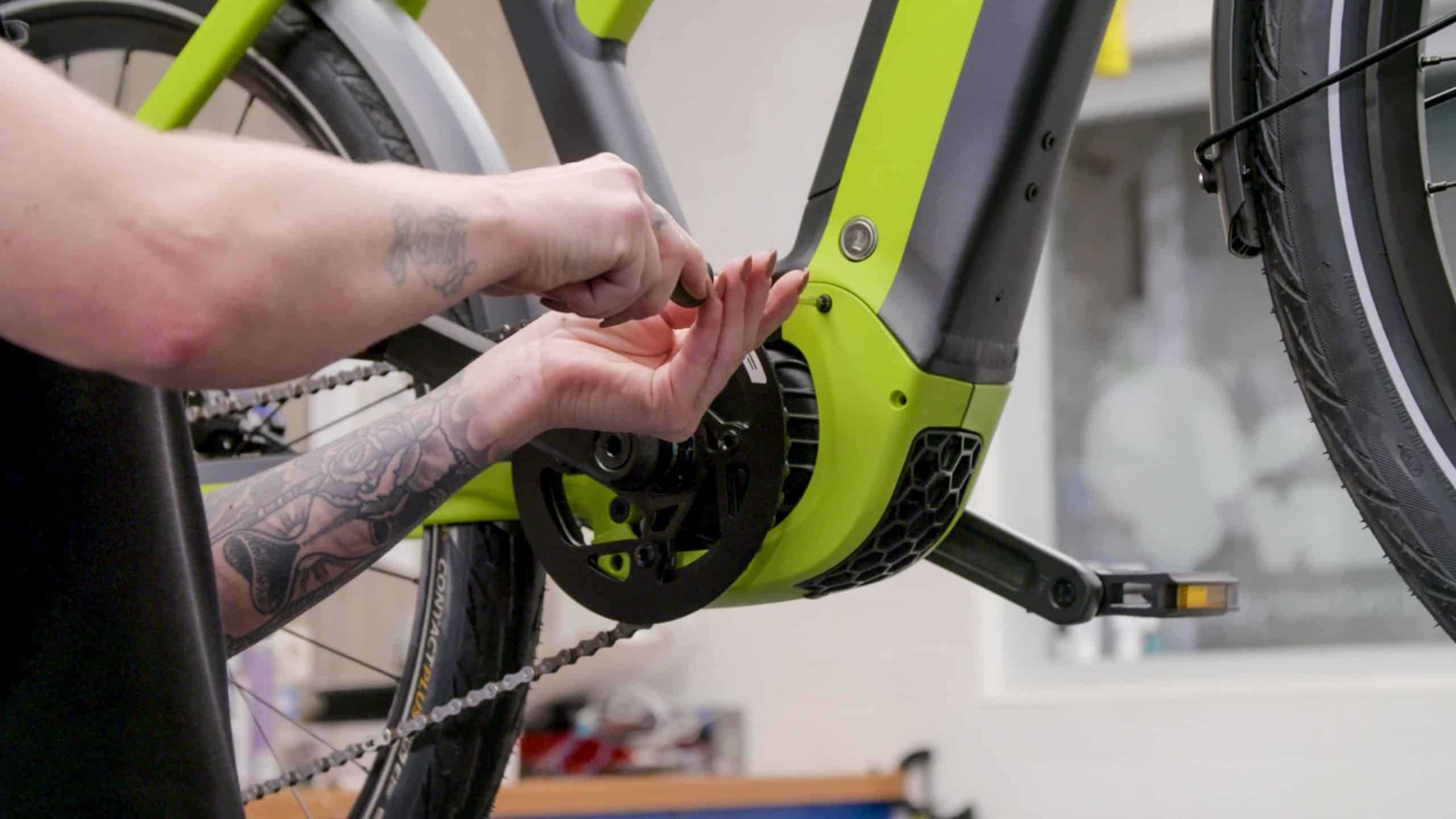
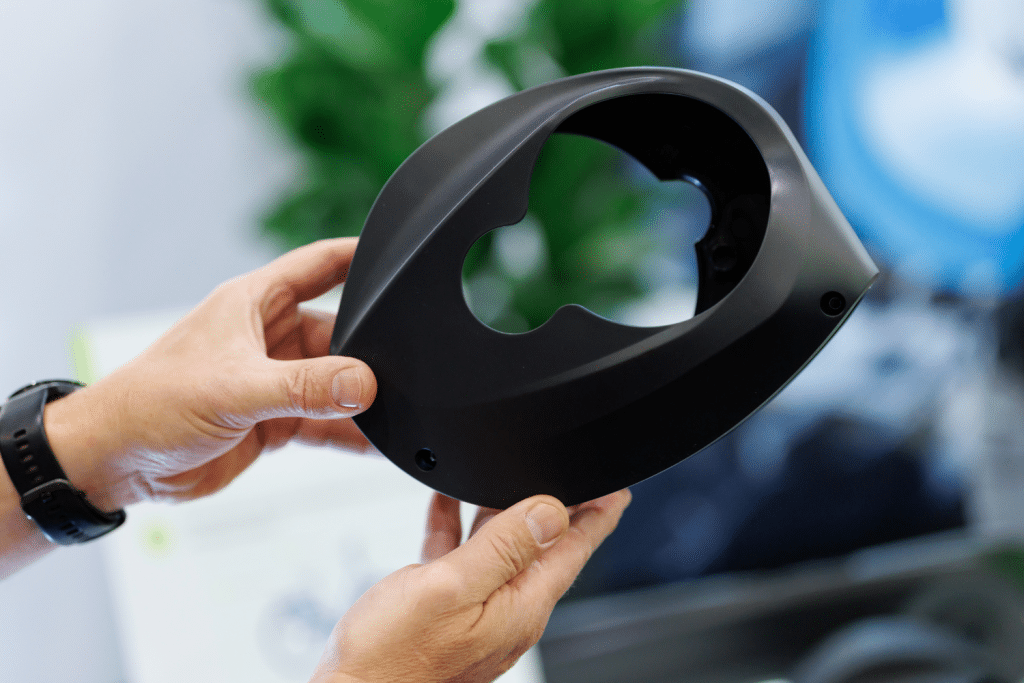
As part of the ReCYCLE project, five plastic components of an e-bike were investigated: the chain guard, motor cover, battery casing, coat guard and head tube plate. Technical specifications were established and prototypes developed for each component. These were extensively tested for, amongst other things, mechanical properties, weather resistance, chemical resistance, aesthetic quality and ease of assembly.
The project partners opted in this regard for a step-by-step approach. First an investigation was carried out to determine whether existing components could be used without any design changes from 100 per cent recycled material could be produced. When this proved not possible, the material was optimised in turn, the design was adapted or the subject was completely redesigned. Thus a search was made for each component to find a circular solution that meets the requirements for each component. a45> circular solution that meets the set quality requirements.
The results show that for all five of the components suitable recycled engineering plastics were found. It turned out that black PCR-ABS was suitable for both the chain guard as well as the engine cover, whilst recycled PET and polycarbonate solutions are used for the transparent jacket protector. By manufacturing several components from the same plastic, it is possible for these after use furthermore to be more easily recycled into a single material stream be recycled.
What are the benefits of using recycled plastics?
The results of the ReCYCLE project show that recycled plastics can be a suitable alternative to virgin materials. Extensive material tests show that most mechanical properties are largely retained after repeated recycling, although impact strength does decrease. Furthermore, recycled ABS performs more consistently than recycled polycarbonate.
The repeated reuse of materials also offers opportunities. Provided that any loss of quality remains within acceptable limits and downcycling is permitted, ABS can undergo an estimated 5 to 14 recycling cycles. For polycarbonate, the figure is 2 to 4 cycles. Actual reusability depends on the material properties and the quality requirements of the subsequent application.
Significant CO₂ reduction and competitive costs
A life cycle assessment shows that the use use of recycled material can yield significant environmental benefits. Compared with components made from virgin materials, the following CO₂ reductions have been calculated:
- Battery casing: 68% reduction in CO₂ emissions
- Engine cover: 55% reduction in CO₂ emissions
- Coat protector: 55% reduction in CO₂ emissions
These results show that the choice of material can make a significant contribution to reducing environmental impact. However, shorter transport distances for recycled material may reduce the ultimate environmental benefit. In addition to the environmental benefits, recycled materials also offer economic advantages. Recycled engineering plastics are generally cheaper than virgin materials, but may result in lower process efficiency or a higher product weight. Finding the right material stream and optimising the injection moulding process also take time. However, the results show that, on balance, circular plastic products can be competitive with components made from virgin material.
Designing based on the right quality requirements
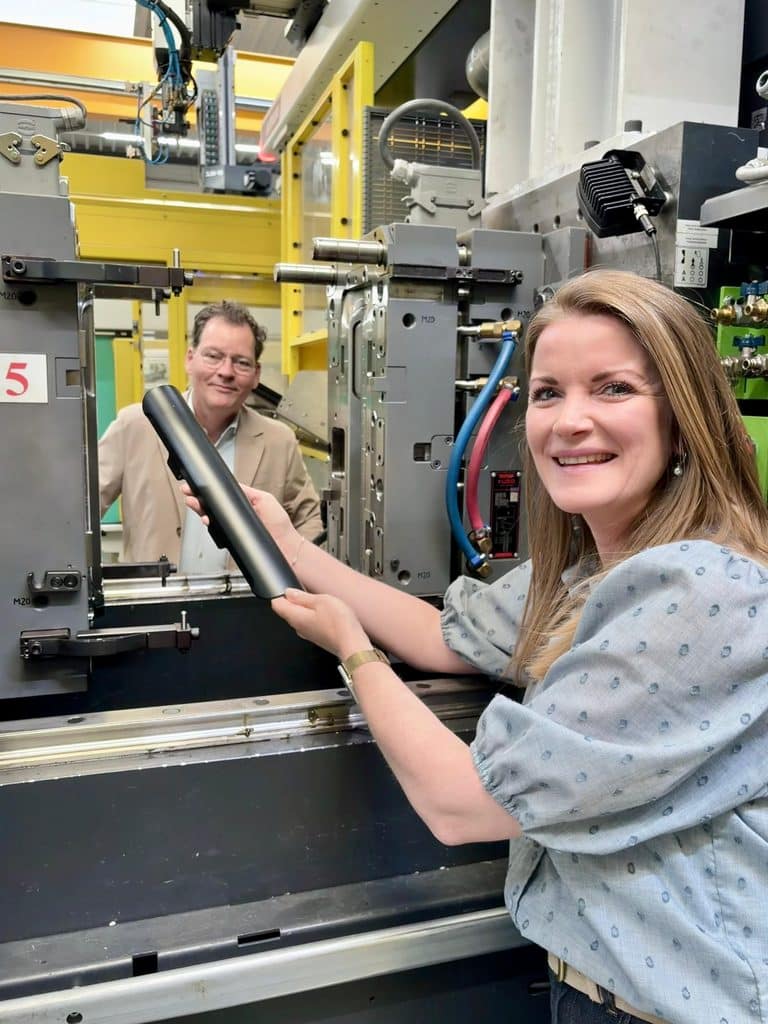
The use of recycled materials requires a different approach to product development. Whereas with virgin plastics, the design is often optimized first and a suitable material is then selected, with recycled materials the process begins with the available material streams. The material properties are then evaluated, and the design is adjusted as necessary to meet the specified quality requirements.
“The design rules for using recycled material are the opposite of those for virgin material.”
Hans Kolnaar – Managing director of Timmerije
A key starting point here is the “Critical to Quality” principle. OEMs must critically assess which product properties are truly decisive for quality and which specifications allow for adjustments. After all, not every property of virgin material needs to be replicated exactly. By specifically improving material properties—for example, with impact modifiers—or by adjusting the product design, the limitations of recycled material can be compensated for.
This approach requires close coordination between material selection, product design, and the manufacturing process. By taking the properties of recycled material into account early in the development process, technical challenges can be addressed in a targeted manner. This results in a solution that meets the product’s functional requirements while also allowing for the circular use of materials.
From technical feasibility to widespread adoption
Although the results of the ReCYCLE project are promising, the large-scale use of recycled engineering plastics requires further steps. A major challenge is the availability of suitable and pure recycled material streams. While materials such as PCR-ABS are now readily available, there are still virtually no commercial recycling streams for other engineering plastics.
The origin of recycled materials also plays an important role. Currently, high-quality recycled materials are often sourced from abroad, while longer transport distances can offset the ultimate CO₂ reduction. Developing regional recycling streams—for example, by recovering engineering plastics from end-of-life vehicles and electrical appliances—can contribute to a more manageable material cycle.
From acquired knowledge to new applications
In addition to the five components developed, the project has produced a practical toolbox with guidelines for material selection, circular design, and disassembly. This knowledge helps designers take into account the properties and future recyclability of materials as early as the product development stage. Furthermore, the insights gained are applicable beyond the bicycle industry. In sectors such as the automotive and electronics industries, recycled engineering plastics also offer opportunities for high-quality plastic products. As such, ReCYCLE provides a foundation for further developing circular solutions and applying them on a larger scale.